Covert Killer

Editorial, Uncategorized

By 2020, cancer cases in the United States are expected to increase by 24% in men and 21% in women.

Some of the most common types of cancer expected to rise include melanoma, prostate, liver, kidney, lung and breast cancers.

The Modern Paradox – Luxury is Toxic

o-toxic-chemicals-facebook

The modern lifestyle is one of luxury and convenience. From beverages to beauty products, todays consumers have a vast array of options to choose from to satisfy their daily needs. Freedom of choice in a competitive marketplace, that is the beauty of living in the United States.

In a minimally regulated system, overconsumption in the pursuit of luxury has become toxic. Companies now use chemicals to enhance products, reduce costs, and increase profits. The Food and Drug Administration (FDA) and the Environmental Protection Agency (EPA) are supposed to regulate exposure to toxic chemicals. However, the system has failed. There are approximately 85,000 registered chemicals, but only 200-300 have been tested for safety.

Chemicals are “innocent until proven guilty” in the U.S.

Laboratory Glassware

In America’s free marketplace, consumer products are considered safe until proven otherwise. The 1976 Toxic Substances Control Act (TSCA) was enacted to regulate potentially hazardous exposures. However, the act does not require chemicals to be tested for safety before being released to the public.

On June 22, 2016, the TSCA was updated with the passing of the Lautenberg Chemical Safety for the 21st Century Act (LCSA). The intention is that the EPA will improve the screening of active chemicals used today for toxicity in humans. Whether or not this will actually work is unknown.

The number of chemically engineered goods has and continues to rapidly surpass the regulatory systems in place. Each year, approximately 2,000 new chemicals are introduced into consumer items. Personal care products, foods, and household cleaners are just a few places where they are present. We are all eating, drinking and using toxic products everyday. However, with the backlog in toxicity testing, we may never know what is killing us before it’s too late.

The Covert Killer: Caramel Color

Glasses with cola and ice cubes

Caramel coloring types III and IV in carbonated beverages contributes to 25% of the U.S. population’s exposure to the carcinogen, 4-Methylimidazole or 4-MEI (1). The U.S. National Toxicology Program (NTP) conducted experimental studies on rats and found that exposure to 4-MEI led to increases in leukemia, as well as adenomas and carcinomas of the lung. While no human data is available yet, these findings were enough to categorize 4-MEI as a carcinogen.

This manufactured caramel color has no other purpose than to make beverages appear darker. Companies believe that by including this chemical into soft drinks, it will ultimately lead to an increase in sales. Apparently, people prefer soda that’s brown not yellow.

CA Proposition 65: Labeling Toxic Consumer Goods

toxic-products

In 2011, California listed 4-MEI as a carcinogen under Proposition 65 of the Safe Drinking Water and Toxic Enforcement Act of 1986. Proposition 65 requires warning labels for any carcinogen exceeding a “no significant risk level” (NSRL). A no significant risk level is the lifetime average daily exposure associated with a 1-in-100,000 cancer risk (1). This amount for 4-MEI is equal to 29 μg/day. In response, soft drink manufacturers announced that they would lower the concentration of 4-MEI in products sold in California.

Years later, did they really follow through?

In a 2015 study by Johns Hopkins University, researchers tested the concentration of 4-MEI in 110 soft drink samples from stores in California, New Jersey, Connecticut, and New York (1). Various brands were tested, including A&W Root Beer, Diet Coke, Malta Goya, Diet Pepsi, Pepsi One and Regular Pepsi. The average and maximum amount of 4-MEI concentrated in beverages varied dramatically across brands and states. The highest and lowest concentrations across all locations was found in Malta Goya (mean: 945.5μg/L; maximum: 1104μg/L) and Diet Coke (mean: 9.8μg/L; maximum: 10.4μg/L).

A&W Root Beer Diet Coke Malta Goya Diet Pepsi Pepsi One Regular       Pepsi
Mean

4-MEI (μg/L)

CA 68.2 9.5 963.3 78.4 119.7 75.9
NY 61.8 10.2 915.8 304.5 501.5 291.2

Researchers found that 4-MEI concentrations were overall higher in samples purchased in the NY area compared to those purchased in CA. This is evidence that Proposition 65 and other state-level interventions can incentivize manufacturers to reduce chemical exposures and associated risks among consumers.

Soda Consumption: A Social Epidemic

istock_000019918697medium

The National Health and Nutrition Examination Survey (NHANES) calculated the average daily consumption of carbonated beverages in the United States (1). The highest consumption of soda was found among adolescents (ages 16 to 20 years old) and young adults (ages 21 to 44 years old), with approximately 57% of this population consuming 2-3 cans daily. However, this trend varied by beverage type. Colas were found to be the most popular beverage consumed, regardless of age. In contrast, root beer and pepper colas were the least popular.

Soft Drink Consumption A& W Root Beer Diet Coke Malta Goya Diet Pepsi Pepsi

One

Regular Pepsi
Mean               4-MEI (μg/L) CA 68.2 9.5 963.3 78.4 119.7 75.9
NY 61.8 10.2 915.8 304.5 501.5 291.2
 Age Range  (years old) Soft Drink Consumption (% pop.)
Children (3-5) 30.1%
Adolescents (11-15) 56.5%
Young Adults (16-20) 57.1% 1.6 – 3.2 cans daily
Adults (21-44) 57.9% 1.5 – 3.5 cans daily
Adults (45-64) 48.4%
Older Adults (65-70) 34.9%


Cancer Risk

For this study, risk is defined as the lifetime excess risk of developing cancer associated with the consumption of soft drinks. United States federal regulatory agencies set an acceptable cancer risk goal for consumer products as 1 case per 1,000,000 exposed individuals.

Based on average daily consumption patterns and the concentrations of 4-MEI found in soft drinks, researchers identified which beverages posed the greatest risk for consumers. Malta Goya, Pepsi, Diet Pepsi and Pepsi One resulted in 4-MEI exposures with associated risks exceeding 1 excess case per 10,000 exposed individuals.

The lifetime risk of developing cancer is 100 times greater for consumers of caramel colored soft drinks with 4-MEI (Malta Goya, Pepsi, Diet Pepsi and Pepsi One)

soda

Acceptable Risk: 1 case/1,000,000 exposed individuals

Current Risk: 1 case/10,000 exposed individuals


Cancer Burden

The consumption of soda is contributing to rising rates of cancer. But to what degree?

Burden is the lifetime (70 years) excess cancer cases associated with the consumption of beverages by the U.S. population. The number of people who will develop cancer in their lifetime from Pepsi One is approximately 1,000 in California and 4,000 in New York. Comparatively, the number of Malta Goya consumers predicted to develop cancer in their lifetime is roughly 5,000 in both states.

Average Exposure Pepsi Pepsi One Diet Pepsi Malta Goya Coca Cola Diet Coke
CA 1,044 958 628 5,011 167 76
NY 4,009 4,014 2,437 4,764 156 82

 ..

What Can We Do?

1. Federal Regulation

Advocates, NGOs and constituents should pressure policy makers to increase regulation on consumer goods with 4-MEI. Toxic exposure to this carcinogen is unnecessary and should be eliminated.

2. FDA Intervention    

The FDA could set a maximum 4-MEI concentration level for beverages sold in the United   States.

3. Avoid Drinking Soda  

Individuals should avoid drinking soda with caramel coloring, especially Malta Goya, Pepsi, Diet Pepsi and Pepsi One.

Ultimately, relying on political regulations is not enough. The process of creating and implementing restrictions on carcinogens is too slow to keep up with the rapid pace of chemical engineering. Everyday, new toxins are being introduced into consumer products. Chemicals are continuously being modified and exposures are on the rise.

However, advocates should still pressure regulatory bodies to progress towards a system that more effectively minimizes harm to the population’s health. California’s Proposition 65 is one example of success where other states should follow.

People have power as consumers. By avoiding the consumption of soda, individuals can make a statement to companies about the quality of products desired. By choosing healthier alternatives to chemically enhanced products, people are shifting trends that influence what businesses produce in the future.

The most effective way to limit toxic exposure is with you. You have the power to create an immediate impact towards a healthier life. You choose what you eat, drink and use everyday. While our products may be toxic, our choices don’t have to be.


If you enjoyed this article, please like & share below.
Check out Honor Killings in Pakistan.

REFERENCES

1) Caramel color in soft drinks and exposure to 4-methylimidazole: a quantitative risk assessment, Tyler Smith, et al., PLOS One, doi:10.1371/journal.pone.0118138, published online 18 February 2015.

2) Another reason to cut back on soda, Consumer Reports, news story accessed 20 February 2015 at consumerreports.org.

3) Popular soda ingredient poses cancer risk to consumers, Johns Hopkins University Bloomberg School of Public Health news release accessed 20th February 2015 Via EurekAlert!


Maternal Mortality

Editorial, Nina Kharazmi || Photography

 830 women die from pregnancy or childbirth each day around the world.

99% of all maternal deaths occur in developing countries.

(World Health Organization)

..

united-nations

Photo by: United Nations

INTERNATIONAL WOMEN’S DAY

March 8th, International Women’s Day (IWD), offers a great opportunity for people to champion gender equality as they celebrate the historical achievements of women in the social, economic, cultural and political fields (1,2).

For over a century, IWD has been recognized as a time when governments, industry, and NGOs collectively act to better women’s rights through rich and diverse activities, such as political rallies, business conferences, networking events and artistic performances. Today, we need this involvement more than ever as we move forward on a foundation of past historical success.

As we celebrate the past, we must look towards the future and continue to fight for women’s equality. There is still progress to be made, especially in regards to education, health, positions of power in business and politics, and the prevention of violence against women. The truth is clear: every girl deserves a future that is equal, safe and rewarding.

.

bill-and-melinda-gates-foundation

Photo by: Bill & Melinda Gates Foundation


medium

Photo by: Medium

WOMEN’S EQUALITY AND HEALTH 

One way to close the gender inequality gap is to focus on reducing preventable maternal deaths. According to the World Health Organization (WHO), 830 women die from pregnancy or childbirth each day around the world (3). Nearly 75% of all maternal deaths are due to delivery complications, severe bleeding, infections, high blood pressure during pregnancy and unsafe abortions (5). In 2015, approximately 303,000 women died from maternal health complications, most of which could have been prevented (3).

Solutions to avoid or treat pregnancy complications are well known. It is vital that women receive prenatal and postpartum care, as well as skilled care during childbirth. However, women are unlikely to receive adequate care in remote areas and in regions with minimal skilled health workers, such as sub-Saharan Africa. In 2015, only 40% of pregnant women in low-income countries had received the four recommended antenatal care visits (3). Other factors that inhibit women from seeking or receiving care include poverty, distance, inadequate services, cultural practices and lack of information. These barriers must be addressed at all levels of the health system in order to tackle maternal mortality. The timely diagnosis and management of pregnancy related complications is a matter of life or death for the mother and baby.

erin-goodrow-mh-india

Photo by: Erin Goodrow


new-security-beat

Photo by: New Security Beat

THE SUSTAINABLE DEVELOPMENT GOALS 

On September 25th, 2015, member states of the WHO adopted the Sustainable Development Goals (SDGs) with 15-year targets to end poverty and ensure prosperity for all (4). One objective is to reduce the global maternal mortality ratio (MMR) to less than 70 per 100,000 births (3). However, 99% of all maternal deaths occur in developing countries, reflecting the inequities in access to health services. For example, the MMR in 2015 was 239 per 100,000 live births in developing countries versus 12 per 100,000 live births in developed countries. Additionally, over half of the global maternal deaths occur in sub-Saharan Africa, particularly among rural and low-income communities. Overall, women in developing countries have many more pregnancies and have a higher risk of death due to pregnancy. The probability that a 15-year-old woman will die from a maternal cause is 1 in 180 in developing countries versus 1 in 4,900 in developed countries (3). In order to achieve the SDGs, women need greater access to reproductive health services, especially those in low-resource settings.

PRIORITIZING MATERNAL HEALTH 

WHO and numerous organizations have been working to reduce maternal mortality rates by increasing research, providing evidence-based clinical guidance, setting global standards and delivering technical support. During the United Nations General Assembly in 2015, the Global Strategy for Women’s, Children’s and Adolescents’ Health (2016-2030) was launched as a road map for the post-2015 agenda presented in the SDGs. The aim is to end all preventable deaths of women, children and adolescents, as well as provide an environment for health to thrive. In order to implement this strategy, WHO and partners are working on the following regarding reproductive, maternal and newborn health care: addressing inequalities in access to services, ensuring universal health coverage, addressing causes of maternal mortality and morbidities, strengthening health systems and ensuring accountability for quality care.

For efforts to succeed, the world must unite in prioritizing maternal health. Advocates, organizations, and governments need to take a stand against women’s inequality and provide greater agency, support and resources towards tackling maternal mortality.


If you enjoyed this article, please like & share below.
Check out Covert Killer or Tobacco.

REFERENCES

  1. https://www.internationalwomensday.com/About
  2. http://wd2016.org/speaker/jill-sheffield/
  3. http://www.who.int/mediacentre/factsheets/fs348/en/
  4. http://www.un.org/sustainabledevelopment/sustainable-development-goals/
  5. http://www.thelancet.com/journals/langlo/article/PIIS2214-109X(14)70227-X/fulltext

* Cover photo: Center for Strategic and International Studies

Tobacco

Editorial, Uncategorized

.. 

The Rising Prevalence of Tobacco Use in Developing Countries

..

TOBACCO & MORTALITY

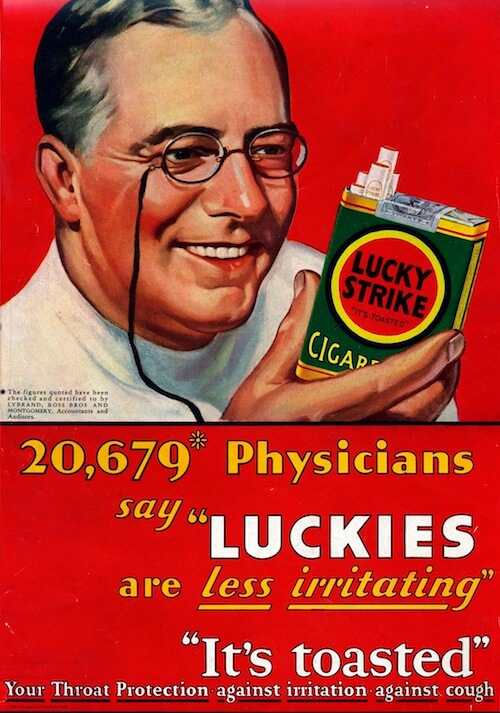
“Tobacco is the only legal drug that kills many of its users when used exactly as intended by manufacturers” (15).

According to the World Health Organization (WHO), tobacco use is responsible for six million deaths each year (15). This includes an estimated 600,000 people who die from second-hand smoke. Health outcomes include death and/or disability from chronic diseases, such as cancer, stroke and chronic respiratory diseases. Additionally, smoking increases the risk of death from infectious diseases.

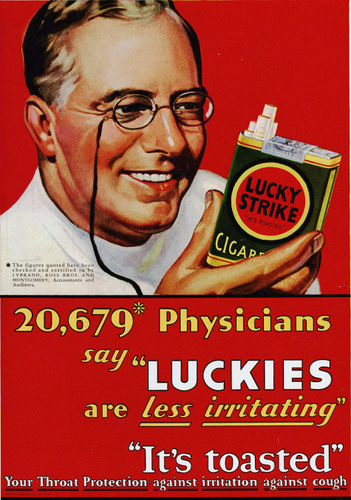
Overwhelming evidence suggests that tobacco marketing greatly influences tobacco use and initiation (3-5). As such, bans on tobacco marketing can greatly reduce individual tobacco use.

GLOBAL TRENDS IN TOBACCO USE

↓ Developed Countries   ↑ Developing Countries

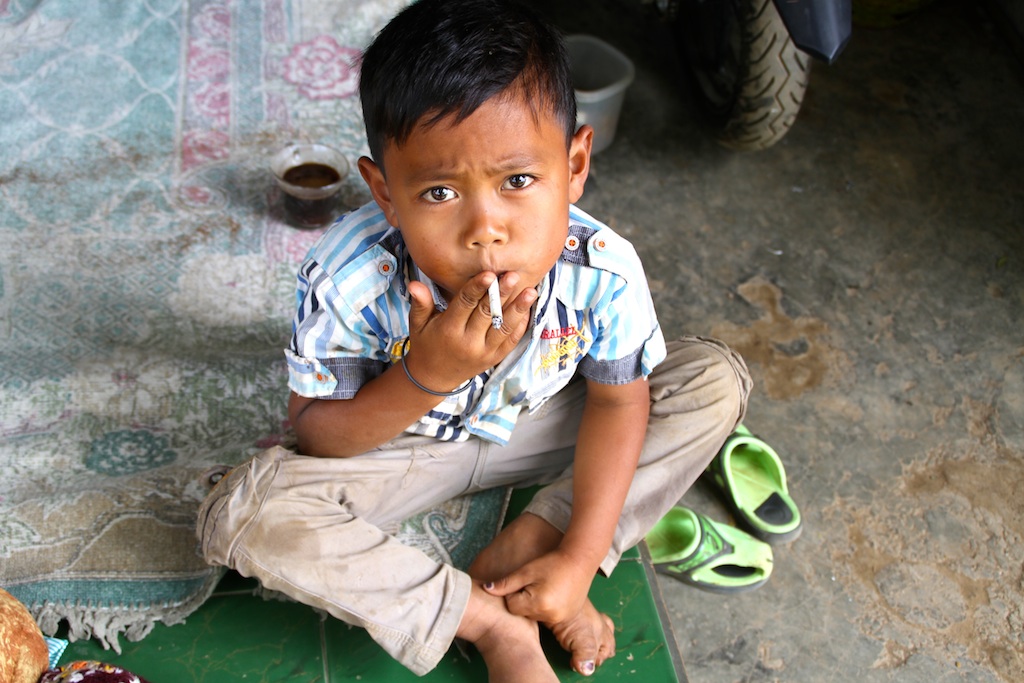
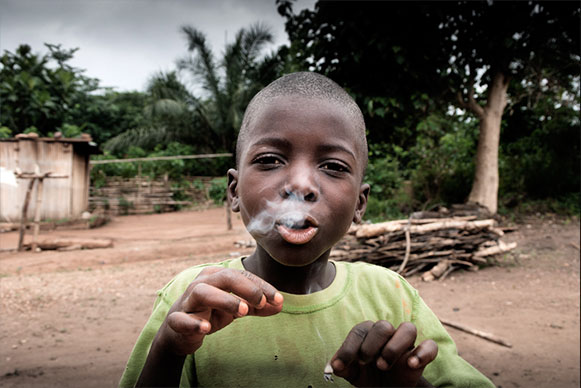
Tobacco use in many high income countries is decreasing rapidly. This is due to government marketing bans and increased public education about the harms of smoking. In contrast, the prevalence of smoking is increasing in many middle- and low-income countries. According to the WHO global report on trends in tobacco smoking 2000-2025, males are more likely to smoke than females, and the prevalence is rising most dramatically in the African Region and the Eastern Mediterranean Region (13).

smoking-kid-indonesia

Photo by: Merinews

Table 1. Age-standardized prevalence of current tobacco smoking among persons aged 15 years and older (14,16).

Country CURRENT TOBACCO SMOKING (%)
  Year 2000 Year 2015
Men Women Both sexes Men Women Both sexes
High-income
Canada 29.3 27.5 27.5 17.7 12.2 14.3
Sweden 32.8 32.9 32.9 20.4 20.8 20.6
Upper-middle-income
China 56.2 3.3 30.4 47.6 1.8 26.3
Lower-middle-income
India 33.8 5.7 20.2 20.4 1.9 11.0
Pakistan 35.2  7.5 21.8 41.9 3 22.9
Low-income
Zimbabwe 29.8 2.7 16.1 31.2 2.1 16.65


TOBACCO MARKETING TRENDS

Tobacco marketing is 81 times greater in Pakistan, India and Zimbabwe than in the United Arab Emirates, Canada and Sweden (7). 

In 2003, member states of the World Health Assembly adopted the Framework Convention on Tobacco Control (FCTC) (6). This agreement provided 180 nations with evidenced-based steps to minimize tobacco sales and ban tobacco marketing. This legally binding treaty even provided agricultural alternatives to those growing tobacco, so as to minimize the economic hardships faced by local producers. Nearly 13 years later, what is the present state of tobacco marketing trends?

A recent study led by the World Health Organization examined the global tobacco marketing environment by comparing 462 communities located in 16 low-, middle- and high-income countries (1). Researchers found that exposure to tobacco marketing is 81 times greater in Pakistan, India and Zimbabwe than in the United Arab Emirates, Canada and Sweden (7). Additionally, the tobacco industry is targeting poor urban youth in developing countries (10-12). This is due to cheaper marketing costs and the greater potential to reach more people in densely populated regions. Furthermore, according to the WHO study (1), high levels of tobacco marketing (e.g. posters, print media and cinema) was even found in 14 middle- and low-income countries that had ratified the FCTC. Countries that ratified this agreement were required to implement a comprehensive ban on tobacco advertising, promotion and sponsorship. However, many developing countries are lacking in agency and governmental capacity to fully implement the recommendations of FCTC (2). This is worsened by the alarming influence of the tobacco industry in lobbying their interests (8,9).

Governments, NGOs, and other key stakeholders need to take a stand against the tobacco companies. Media and advocacy work must continue to focus on the populations currently being abused by corporate greed. Urban youth in developing countries are the greatest target of the tobacco industry, and therefore, should become a major focus for public education initiatives about the harmful effects of tobacco use. Nations across the globe have already taken a positive step forward by agreeing to the Framework Convention on Tobacco Control. People must now take the next step by supporting fellow nations in implementing this agreement to ban tobacco marketing. Financial resources, capacity building and continued media attention are needed now more than ever. A healthier and more equitable world is possible in the future, but there is a long way to go.


If you enjoyed this post, please like & share below. 
Check out Covert Killer or Pakistan.

REFERENCES

1) http://www.who.int/bulletin/volumes/93/12/15-155846.pdf

2) http://www.triplepundit.com/2015/12/developing-countries-targeted-tobacco-marketing/

3) The role of the media in promoting and reducing tobacco use. NCI Tobacco Control Monograph No.19. Bethesda: National Institutes of Health; 2008.

4) DiFranza JR, Wellman RJ, Sargent JD, Weitzman M, Hipple BJ, Winickoff JP; Tobacco Consortium, Center for Child Health Research of the American Academy of Pediatrics. Tobacco promotion and the initiation of tobacco use: assessing the evidence for causality. Pediatrics. 2006 June ;117(6):e1237–48. doi: http://dx.doi.org/10.1542/peds.2005-1817 PMID: 16740823

5). Pierce JP, Choi WS, Gilpin EA, Farkas AJ, Berry CC. Tobacco industry promotion of cigarettes and adolescent smoking. JAMA. 1998 Feb 18;279(7):511–5. doi: http://dx.doi.org/10.1001/jama.279.7.511 PMID: 9480360

6) World Health Organization. Parties to the WHO Framework Convention on Tobacco Control.  Updated 26 July 2016. Retrieved from http://www.who.int/fctc/signatories_parties/en/

7) Gilmore, Anna. Big tobacco targets the young in poor countries – with deadly consequences. The Guardian. 1 December 2015. Retrieved from https://www.theguardian.com/global-development/2015/dec/01/big-tobacco-industry-targets-young-people-poor-countries-smoking

8) AMESCA regional plan 1999-2001. London: British American Tobacco: 1999. Available from: http://legacy.library.ucsf.edu/tid/kiz13a99/pdf [cited 2014 Jul 15].

9) Lee S, Ling PM, Glantz SA. The vector of the tobacco epidemic: tobacco industry practices in low and middle-income countries. Cancer Causes Control. 2012 Mar;23(1) Suppl 1:117–29. doi: http://dx.doi.org/10.1007/ s10552-012-9914-0 PMID: 22370696

10) Perlman F, Bobak M, Gilmore A, McKee M. Trends in the prevalence of smoking in Russia during the transition to a market economy. Tob Control. 2007 Oct;16(5):299–305. doi: http://dx.doi.org/10.1136/tc.2006.019455 PMID: 17897987

11) Gilmore AB, Radu-Loghin C, Zatushevski I, McKee M. Pushing up smoking incidence: plans for a privatised tobacco industry in Moldova. Lancet. 2005 Apr 9-15;365(9467):1354–9. doi: http://dx.doi.org/10.1016/S0140- 6736(05)61035-5 PMID: 15823388

12) Neuwirth B. Marketing channel strategies in rural emerging markets: unlocking business potential. [Internet]. Evanston: Kellogg School of Management; 2012. Available from: http://www.kellogg.northwestern. edu/~/media/files/research/crti/marketing%20channel%20strategy%20 in%20rural%20emerging%20markets%20ben%20neuwirth.ashx [cited 2013 Aug 15].

13) World Health Organization. Global Health Observatory (GHO) data: Prevalence of tobacco smoking. Accessed 1 December 2016. Retrieved from http://www.who.int/gho/tobacco/use/en/.

14) World Health Organization. Prevalence of tobacco smoking. Accessed 1 December 2016. Retrieved from http://gamapserver.who.int/gho/interactive_charts/tobacco/use/atlas.html

15) World Health Organization. WHO global report on trends in tobacco smoking 2000 – 2025. Updated 2016. Accessed 1 December 2016. Retrieved from http://www.who.int/tobacco/publications/surveillance/reportontrendstobaccosmoking/en

16) World Health Organization. WHO global reports on trends in prevalence of tobacco smoking 2015. (2015). Retrieved from http://apps.who.int/iris/bitstream/10665/156262/1/9789241564922_eng.pdf?ua=1

Pakistan

Editorial, Nina Kharazmi || Photography

Honor Killings in Pakistan

Over 1,000 women are brutally murdered in Pakistan each year.

October 6, 2016
borgen-magazine

Photo by: Borgen Magazine

Pakistan is a patriarchal society where women’s behaviors are traditionally limited by cultural restrictions in order to preserve their chastity. Any deviant behavior is therefore deemed immoral and brings dishonor upon the family. Consequently, women labeled as deviant are often murdered by male relatives or neighbors in order to restore familial honor and reputation within the community (1). These brutal acts of murder are known as honor killings. Each year, over 1,000 women in Pakistan are murdered in the name of honor.

While “immoral behavior” includes infidelity, it also encompasses a range of unexpected behaviors. For instance, women are often murdered for being raped, refusing an arranged marriage, dressing “inappropriately” or acting flirtatious. It can also be warranted by familial quarrels over property ownership, inheritance issues, or a woman’s desire to marry for love. Many times women are even murdered on the basis of suspicion alone (2).

gospel-herald

Photo by: Gospel Herald

Human rights groups have been pressuring the Pakistani government to put an end to honor killings. However, authorities have been unsuccessful and have often even turned a blind eye. In many cases, murders are not even investigated, leaving perpetrators free from prosecution (3).

bbc

Photo by: BBC

This issue has gained international attention, especially with the rising number of high-profile honor killings this year. One such case was Qandeel Baloch, a Pakistani social media star, who was strangled to death by her brother in July. Pakistani filmmaker and activist, Sharmeen Obaid, also heightened international attention towards this issue in her Academy Award winning documentary, A Girl in the River: The Price of Forgiveness.

In response to the rising campaigns for women’s rights, the Pakistani government passed a bill ensuring that killers receive a mandatory life sentence (4). Previously, a killer could be pardoned for murder if he gained forgiveness from the victim’s family. This new legislation no longer allows freedom from impunity. Even still, it remains uncertain whether this law is enough to deter honor killings. However, activists everywhere are celebrating this new step in the right direction towards ending violence against women.

cnn-honor-killing-suspects-taken-to-court

Honor killing suspects are blind folded before their court hearing. (Photo by: CNN)

… 


If you enjoyed this article, please like & share below.
Check out Maternal Mortality or Tobacco.

REFERENCES

  1. “Pakistan rejects pro-women bill”. BBC News. March 2, 2005.
  2. Hassan, Yasmeen. “The Fate of Pakistani Women”. New York TimesMarch 25, 1999.
  3. “Pakistan’s honour killings enjoy high-level support”. Taipei Times. The Liberty Times Group. Retrieved September 20, 2016.
  4. http://www.bbc.com/news/world-asia-37578111.

Freedom

Nina Kharazmi || Photography

 …

Freedom, Poverty and Human Rights

Poverty is the failure to acquire certain fundamental freedoms, including the freedoms from disease, hunger, and illiteracy. In order for people to have the freedom to live a healthy life, there cannot be obstacles preventing the legitimate pursuit of good health and well-being. Simultaneously, society must support individuals by creating an environment that allows for the achievement of good health. Once these basic freedoms are acquired, an individual attains a level of minimal human dignity. According to the human rights approach, people have inalienable rights to these freedoms. It is a human right to be free from hunger and disease. Once people attain a minimal level of human dignity they are then able to gain something greater – the freedom of choice and the power to create a better life.

 …


Office of the United Nations High Commissioner for Human Rights. (2004). Human Rights and Poverty Reduction: A Conceptual Framework. Retrieved from http://www.ohchr.org/Documents/Publications/PovertyReductionen.pdf

Reality

Nina Kharazmi || Photography

Alice: Modern Tale of Wonder

A surrealist portrayal of a young adult’s struggle in search of truth beyond the realm of her preconceived reality

As human beings age, they become increasingly constrained by the social world. Innocence and curiosity from childhood escapes, as our understanding of reality becomes solidified over time. At a point of transition in life, many people find themselves questioning their purpose. This is especially true of young adults moving from the role of dependency to the independent world of professionalism. Who am I? What should I be doing? What will I become? These questions are often answered with a false sense of certainty and limited within supposed normalcy.

Throughout life, external influences have shaped our perceptions of the world. The media, parental pressures, and peer judgments have all contributed to these views. In the process of socialization and learning, we often lose touch with the ability to question our perceived truths. What is reality? What is the ‘real’ world?

This film presents these concerns through surrealist experiences of a young adult in an urban setting. The story begins by presenting a world void of color. This black and white realm is symbolic of the preconceived notions of the world based on our own knowledge and experiences. In this universe, everything has a place and manner of being. People move rapidly throughout their daily lives, which represents the idea that we are always running out of time. As a result, people are forever chasing the future while forgetting to be present in the moment.

The delusional black and white world is shattered once events take place that disrupt the norm. The young girl then follows her own curiosity in search of truth. By opening her mind, an alternate universe of color is exposed. She is then led to contemplate her own beliefs and identity, which is portrayed through the use of masks. Through self-discovery, she learns that she had been blind to the color of her own world all along.

The themes of time, curiosity, and identity are presented and inspired by the works of Lewis Carroll.

Truth

Nina Kharazmi || Photography

Life is made of stories.

Violence, corruption, abuse.

Somewhere between past & present lies truth.

Discover truth and you will find power,

The power to change the world.

The power to fight for freedom, justice & hope.

By exposing the dark side of the human condition,

There may be light.

As truth is enlightenment.

And people have the power,

The power to change the world.